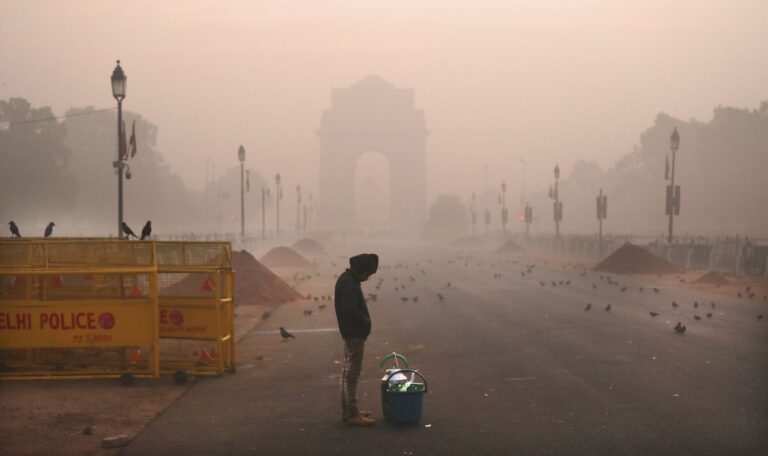
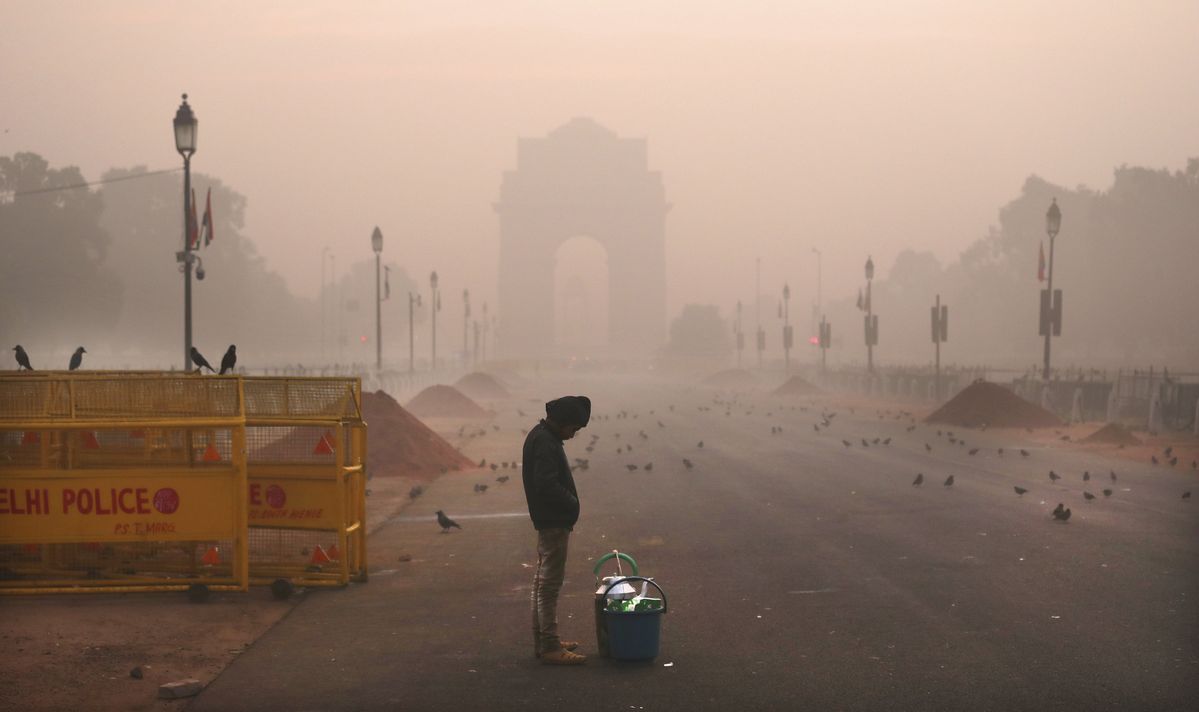
India’s capital air has become toxic, with Delhi again leading the world’s most polluted cities list. After the celebrations for Diwali, the Air Quality Index (AQI) in some parts of the city touched a whopping 442, leaving the air quality well and truly in the ‘Severe’ or ‘Hazardous’ zone. The yearly environmental catastrophe has exposed the city’s 20 million inhabitants to grave risks, highlighting the breakdown of enforcement as well as public compliance.
The Poisoned Mix: Stubble, Firecrackers, and Stagnation
The post-Diwali dramatic surge is a result of a ‘toxic cocktail’ of emissions. Although the Supreme Court had ordered a limited period of time and the use of ‘green crackers,’ large-scale disregard of these directives resulted in huge releases of fine particulate matter, particularly PM2.5. These tiny particles, capable of reaching deep into the lungs and blood, saw their levels almost 60 times higher than the World Health Organization’s (WHO) annual safe limit
Adding to the crisis is the ongoing problem of stubble burning in border states such as Punjab and Haryana, even as farm fires have been reportedly decreasing. The last, and most crucial, factor is the adverse meteorology that is common during the season. Low wind speeds and temperature inversions keep the pollutants close to the surface, wrapping the region in a thick, choking blanket of smog that will not clear.
Health Emergency and Government Action
An AQI of 442 declares a public health emergency. Physicians have cautioned that inhaling this air is tantamount to smoking a pack of cigarettes a day, and sensitive groups—children, the elderly, and respiratory patients—are at immediate and serious health threats. Eyes burning, breathing troubles, and asthma exacerbation are widespread throughout the National Capital Region (NCR).
In response to this, the authorities, including the Commission for Air Quality Management (CAQM), have invoked emergency steps under the Graded Response Action Plan (GRAP) Stage II, and possibly even higher stages. These curbs generally involve the regulation of construction activity, prohibition on diesel generator sets, and increased road sweeping and water sprinkling to manage dust. But the cyclical nature of this crisis only underscores the need for immediate structural solutions and not reactionary short-term curbs.
The Way Forward: Sustainable Solutions
Delhi’s yearly smog saga is a glaring indication that cultural celebration should not be at the expense of public health. Change needs to be holistic and year-round: rigorous enforcement of cracker prohibitions, encouraging cleaner transport and fuels, and green farming policies to cease stubble burning. Until government, industry, and people adopt environmental responsibility, the capital will keep gasping for fresh air.
About the Author